What To Do Immediately After Water Damage In Your Home
Discover the most important steps homeowners should take immediately after water damage to minimise property loss, reduce safety risks, and speed up the restoration process.
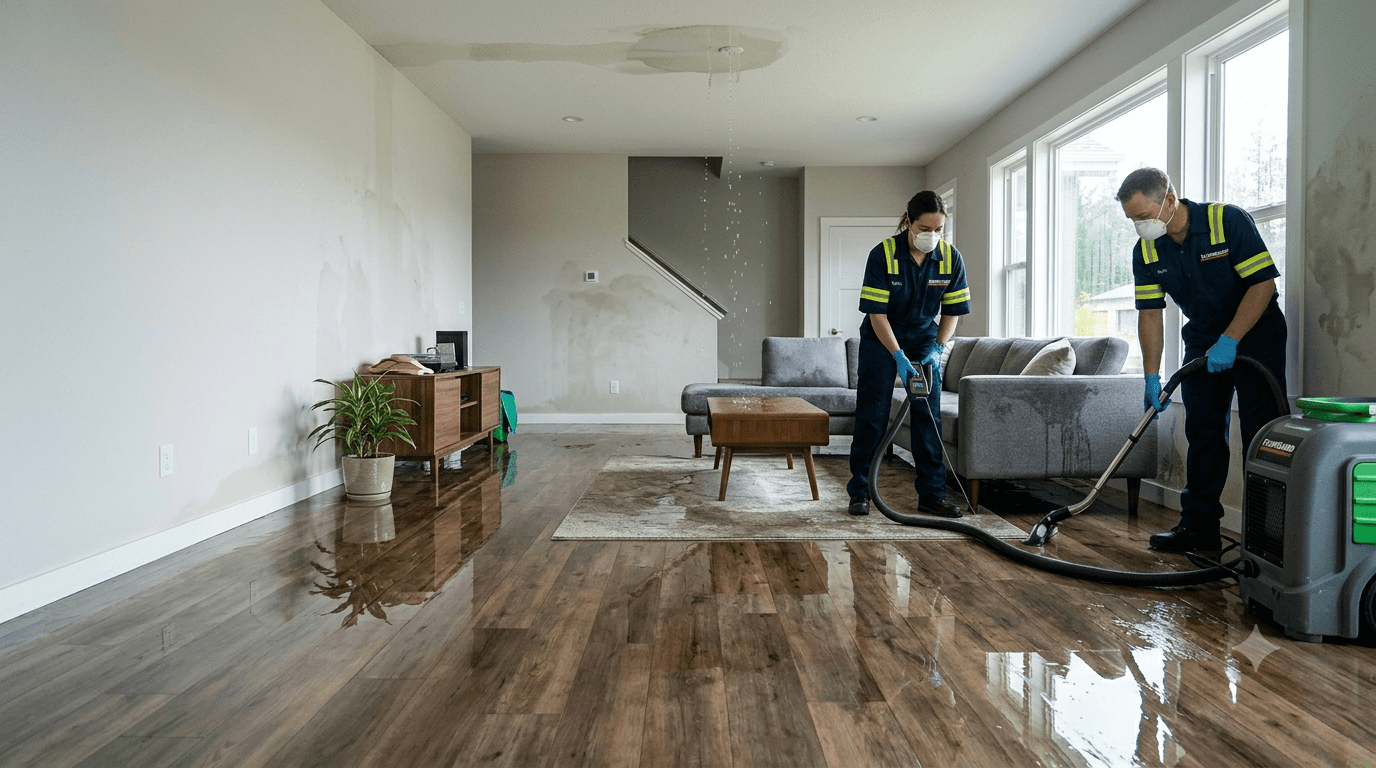
Water damage can happen suddenly and leave homeowners feeling overwhelmed and uncertain about what to do next. Whether caused by burst pipes, flooding, storms, or leaking appliances, acting quickly can make a major difference in reducing long-term property damage and restoration costs.
Here are the most important steps to take immediately after discovering water damage in your home.
1. Prioritise Safety First
Before entering affected areas, ensure the property is safe. Water damage can create electrical hazards, structural instability, and slip risks.
If necessary:
Turn off electricity to affected areas
Avoid standing water near electrical systems
Stay clear of severely damaged ceilings or walls
Contact emergency services if immediate risks exist
Your safety should always come before property recovery.
2. Stop The Source Of Water
If possible, identify and stop the source of the water intrusion.
This may include:
Turning off the main water supply
Shutting down leaking appliances
Temporarily covering roof leaks
Blocking further stormwater intrusion
Stopping the source helps reduce additional damage while waiting for restoration professionals to arrive.
3. Contact A Restoration Professional Immediately
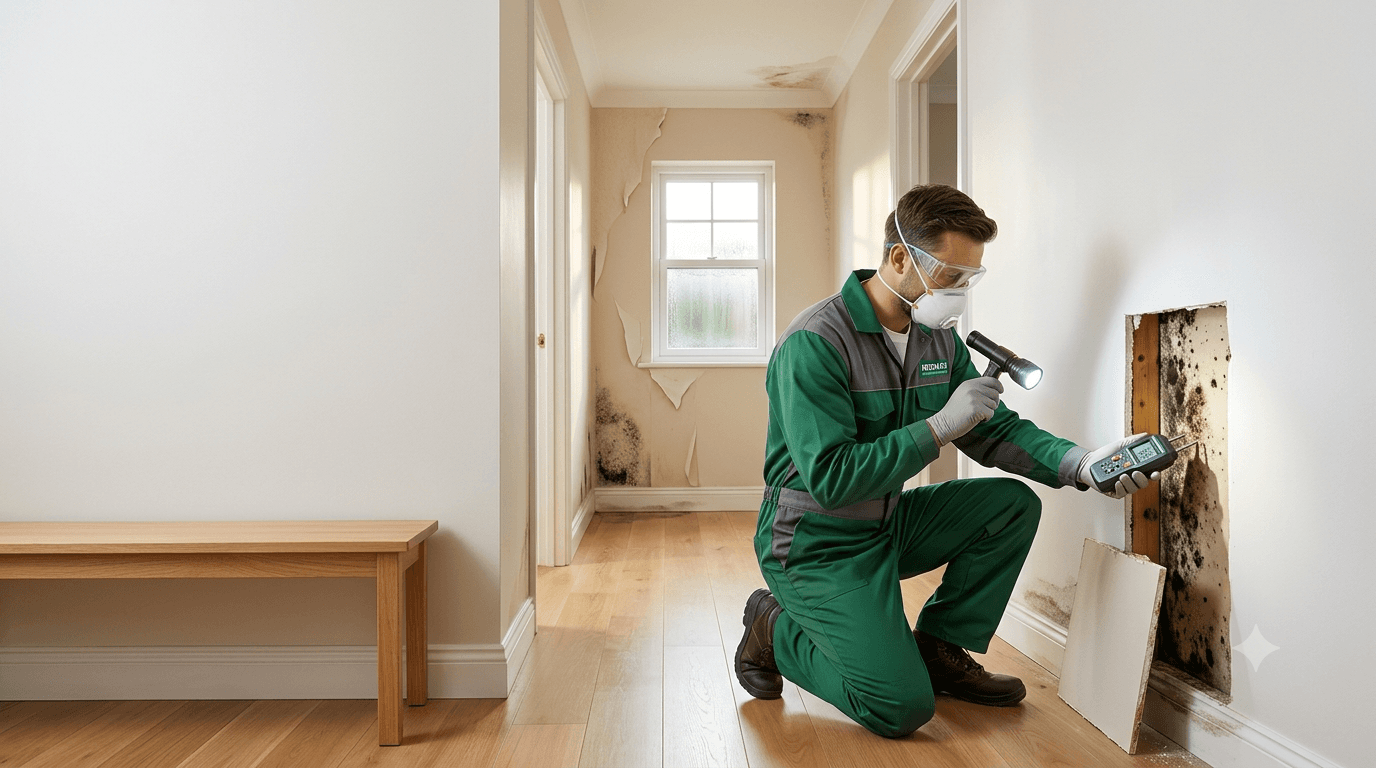
Water damage spreads quickly and hidden moisture can lead to mould growth, structural deterioration, and long-term property issues.
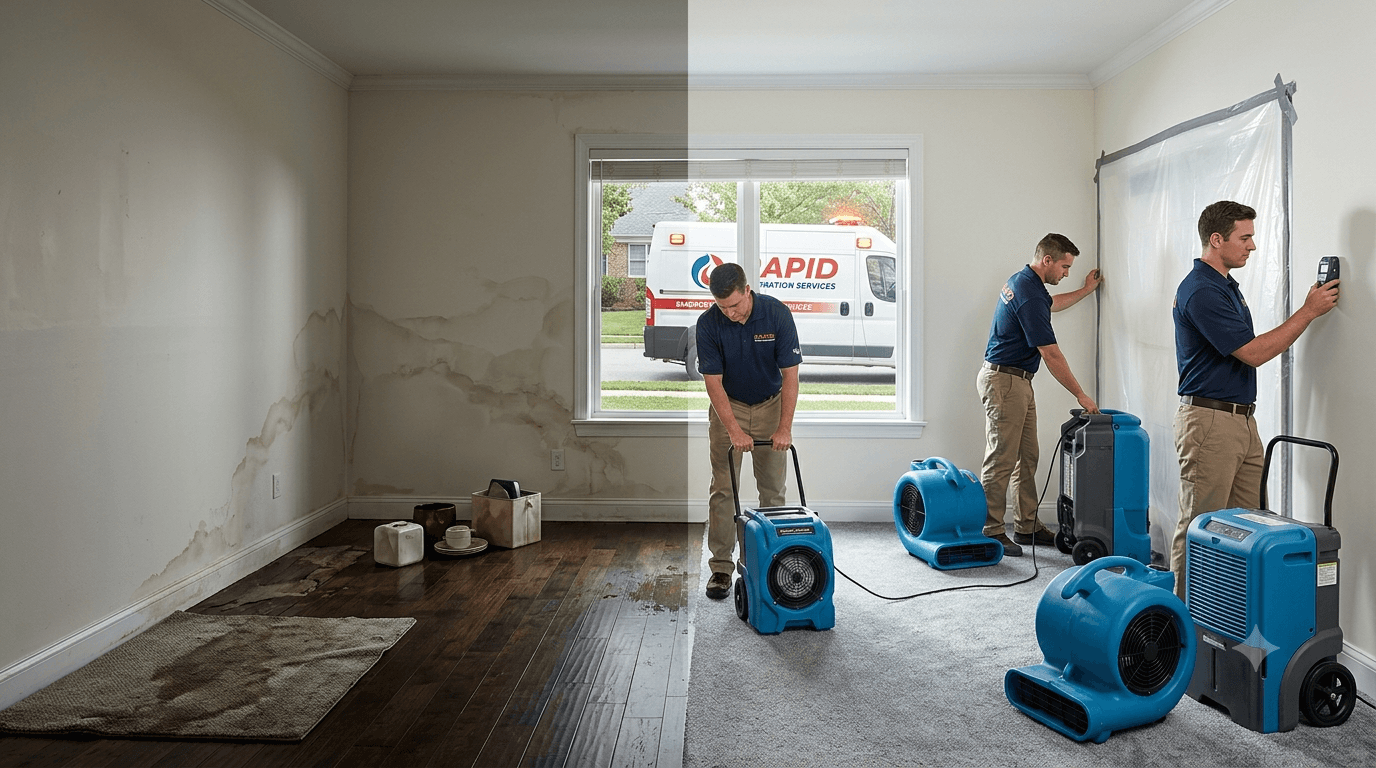
Professional restoration teams use specialised equipment to:
Extract standing water
Detect hidden moisture
Dry structural materials properly
Prevent secondary damage
Restore safe indoor conditions
The faster restoration begins, the better the recovery outcome is likely to be.
4. Document The Damage
If your property damage may involve insurance claims, take photos and videos of affected areas before cleanup begins.
Document:
Damaged furniture and belongings
Flooring, ceilings, and walls
Water intrusion points
Visible structural damage
Clear documentation can help support insurance assessments and restoration reporting.
5. Remove Valuable Items If Safe
Move important belongings, electronics, documents, and valuables away from affected areas if it is safe to do so.
Quick action may help reduce permanent damage to personal items while restoration work is underway.
6. Avoid Delaying The Drying Process
One of the most common mistakes after water damage is waiting too long to begin proper drying.
Moisture trapped behind walls, flooring, and ceilings can quickly create:
Mould growth
Unpleasant odours
Structural weakening
Material deterioration
Professional drying equipment is essential for complete moisture removal.
Final Thoughts
Water damage situations can feel stressful, but taking immediate action can significantly reduce long-term problems and recovery costs.
At Stonebridge Restoration, our emergency response team is available 24/7 to help homeowners and businesses respond quickly, minimise damage, and begin the restoration process with confidence.
If you’re dealing with water damage, don’t wait — early intervention can make all the difference.

Julie Kim
Restoration industry expert specializing in disaster recovery, insurance mediation, and structural restoration guidelines.
POPULAR POSTS
Active water, fire, or structural damage? We dispatch a certified crew within 60 minutes of your call, day or night.
- 60-minute dispatch guarantee
- IICRC-certified technicians
- Works directly with all insurers
- Free on-site assessment